


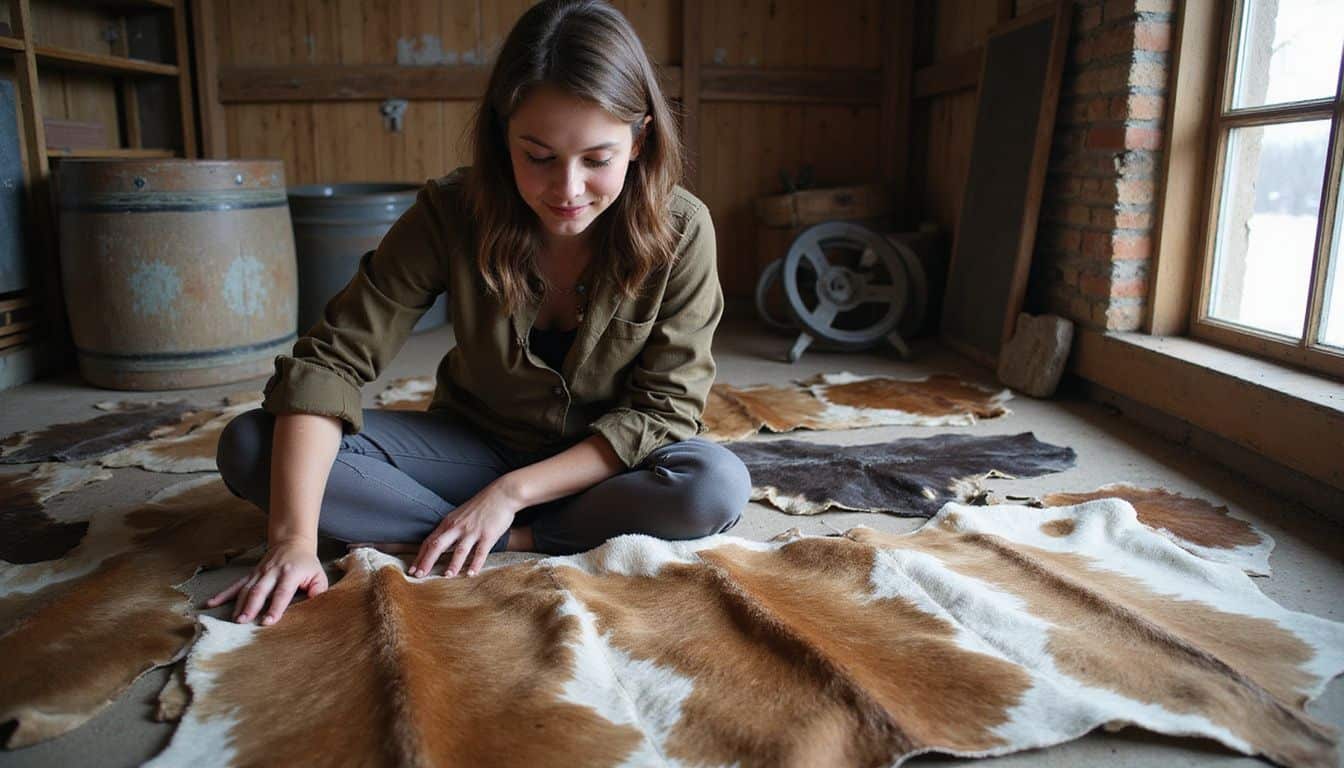
How Animal Hair Rugs Are Made
Want a cozy, stylish rug but unsure how animal hair rugs are made? These rugs, like cowhide or sheepskin, add luxury to any room. We’ll show you the step-by-step process, from selecting hides to final stitching.
Read on to learn how these stunning pieces come to life.
Selecting the Animal Hair or Hide To Use For A Rug
Choosing the right hair or hide makes all the difference. Common options include cowhide, sheepskin, and bison—each with unique textures and durability.
Ethical sourcing matters—buy from suppliers who prioritize animal welfare and sustainable practices. Proper hides should be free of damage for a flawless rug.
Types of animal hair used (e.g., cowhide, sheepskin, bison)
Animal hair rugs bring texture and warmth to any space. Different hides offer unique looks and feels.
- Cowhide – Tough and durable, cowhide rugs feature natural patterns. They resist wear, making them great for high-traffic areas.
- Sheepskin – Soft and fluffy, sheepskin rugs provide extra coziness. Their underfur traps heat, perfect for cold floors.
- Bison – Thick and rugged, bison hide rugs add a rustic touch. The guard hairs give them a shaggy appearance.
- Goatskin – Lightweight yet strong, goatskin rugs often come in bold colors. Their natural markings make each piece unique.
- Deerskin – Supple and smooth, deerskin rugs drape easily over furniture. They’re prized for their velvety feel.
- Silver Fox – Luxurious and sleek, silver fox fur rugs add high-end style. The long, silky guard hairs catch the light beautifully.
After selecting the right hide, the next step is cleaning and preparing it for use.
Sourcing and ethical considerations
Moving from types of animal hair—like cowhide, sheepskin, and bison—to how they’re sourced requires care. Ethical furriers prioritize hides from animals raised for meat, reducing waste.
Some suppliers follow strict guidelines, ensuring no harm comes solely for rugs. Look for certifications like the Leather Working Group to verify responsible practices.
Sustainability isn’t a trend—it’s the future of craftsmanship.
For home décor lovers, transparency matters. Sheepskin and cowhide rugs often come as byproducts of food industries. Avoid illegal or cruel sources by checking labels and supplier histories.
Hand-tufted rugs made ethically last longer and feel better underfoot. Always ask about tanning methods, too—eco-friendly options protect both your floor and the planet.
Cleaning and Preparing the Hair or Hide
The hide gets washed with gentle soap and warm water to remove dirt, then dried carefully. Trimming shears shape the edges before it’s ready for tanning.
Washing and sanitizing processes
Animal hair rugs need thorough cleaning before becoming home décor pieces—dirt and oils must go!
Trimming and shaping the hide
After washing and sanitizing, the hide moves to the next step—trimming away uneven edges and excess material. Workers use sharp shears or knives to cut the fur rugs into clean, symmetrical shapes while preserving their natural texture.
A well-trimmed hide lays the foundation for a rug that’s both beautiful and functional.
The hide is then stretched flat to mark patterns—whether oval, rectangular, or custom designs for home décor. Skilled hands shape cowhide rugs or sheepskin pieces carefully, ensuring no valuable material goes to waste.
Tools like leather punches help reinforce areas needing stitching later on.
Tanning and Preserving the Hide
The hide gets treated with chemicals or natural solutions to keep it soft. This process also stops the hair from shedding or rotting over time.
Types of tanning methods
Tanning turns animal hides into durable, soft materials perfect for fur rugs and home décor. Different methods affect the texture, quality, and appearance of cowhide rugs or sheepskin rugs.
- Vegetable Tanning – Uses natural tannins from plants like oak or birch bark. This eco-friendly process takes weeks but gives the hide a firm, earthy feel. It’s great for decorative pillows and rustic-style rugs.
- Chrome Tanning – Relies on chromium salts for a faster process, just a few days. The result is softer, more flexible hides with water resistance. Ideal for plush sheepskin rugs.
- Oil Tanning – Treats hides with fish oil or other fats for a supple, water-repellent finish. Often used for bison or deer hides, giving them a natural look perfect for cozy spaces.
- Brain Tanning – An ancient method using animal brains to break down fibers. It creates ultra-soft, lightweight hides, common in traditional sheepskin rugs.
- Aldehyde Tanning – A synthetic option that avoids chrome, making it hypoallergenic. Best for high-end cowhide rugs needing a softer texture.
- Smoke Tanning – Exposes hides to wood smoke after oil or brain tanning. Adds a rich color and extra durability, often seen in handcrafted rugs.
Each method shapes the final product, whether it’s a rugged bison rug or a sleek cowhide centerpiece.
Ensuring durability and softness
Tanning methods affect how long an animal hair rug lasts and how soft it feels. Vegetable tanning keeps cowhide rugs sturdy but takes time, while chrome tanning speeds up the process and adds extra softness, ideal for sheepskin rugs.
Conditioning treatments help maintain texture and prevent cracking in fur rugs. Oils or waxes are often applied to protect the fibers, keeping them smooth for home décor use. Proper drying techniques also prevent stiffness, ensuring the hide stays pliable over time.
Designing and Cutting the Rug
Artisans sketch patterns on the hide before cutting it into shapes—circles, rectangles, or custom designs. Sharp shears and precision knives help create clean edges for a polished finish.
Creating patterns and shapes
Designing fur rugs starts by choosing bold patterns, like geometric cuts or organic curves, to fit any home décor style. Cowhide rugs often feature natural markings left untouched. Sheepskin pieces get trimmed into soft rectangles or circles.. Tools like stencils help outline designs before cutting. Skilled workers hand-cut each piece carefully, keeping edges smooth. Custom orders may add unique shapes—stars, hearts, even animal silhouettes.
Stitching and Finishing Touches
Expert tailors sew the edges with thick thread, adding strength to each rug. A non-slip base gets attached last, keeping rugs steady on hardwood or tile floors.
Binding edges and securing seams
Binding edges keep fur rugs from fraying. Workers use strong thread or leather strips to sew the borders tightly, making sure they last longer. A sewing machine or hand stitching can do the job—it just depends on the design and thickness of the hide.
Securing seams prevents gaps where pieces join together. Heavy-duty glue or extra stitches reinforce weak spots, especially in high-traffic areas. Proper sealing also helps avoid dirt buildup between layers, keeping your rug clean and sturdy.
Next up: adding backing for stability makes sure it lies flat on any floor type.
Adding backing for stability
Animal hair rugs need strong backings—like latex or rubber—to stay flat on floors without slipping… These materials grip surfaces well while keeping their shape over time… Some rugs get cloth backings too—they add extra cushioning underfoot…
Workers glue or stitch these layers carefully so edges stay neat… Non-slip coatings help prevent accidents on smooth tiles or hardwood… The right backing makes sure your rug lasts longer without curling at corners…
For heavy hides like bison or cowhair, thicker backings work best against wear-and-tear… Factories test each piece before shipping out… They check if seams hold tight during daily foot traffic… Custom orders sometimes skip backings, but most buyers prefer them… It’s all about balancing looks + safety under your feet!
Quality Control and Inspection
The final step ensures every animal hair rug meets high standards. Workers check stitching, backing, and hair quality for flaws. Automated machines scan rugs for loose fibers or uneven surfaces.
Experts also inspect color consistency and texture by hand.
Defective rugs get sent back for repairs. Only perfect pieces pass inspection—each one gets tagged with a quality seal before packing. The process guarantees durable, safe products ready for homes worldwide.
Conclusion
Animal hair rugs blend nature’s beauty with skilled craftsmanship. Each step—from selecting hides to stitching seams—ensures quality and charm. These rugs add warmth and style to any space.
Choose one, and enjoy a touch of rustic elegance at home.
FAQs
1. What types of animal hair are used to make rugs?
Sheep wool, goat hair, and yak fur are common choices. These natural fibers are strong, soft, and durable, making them ideal for weaving rugs.
2. How do artisans prepare animal hair for rug-making?
First, they clean and wash the hair to remove dirt and oils. Then, they comb and spin it into yarn, ready for weaving or knotting into rugs.
3. What methods are used to weave animal hair rugs?
Hand-knotting and hand-tufting are traditional techniques. Some rugs are made on looms, while others are crafted by skilled weavers using simple tools.
4. Why do animal hair rugs last so long?
The natural fibers resist wear and tear. Proper care—like gentle cleaning and avoiding direct sunlight—helps them stay beautiful for years.

Ultimate Guide To Western Rugs And Animal Hide Rugs
Picking the right Western area rugs and animal hide rugs can be tricky for many homeowners. These rugs bring a mix of style and history to any room, with roots dating back to early American settlers.
Our guide shows you how to choose, place, and care for these stunning pieces of home decor. Ready to transform your space with the perfect western-inspired rug?
Types of Western Rugs
Western rugs bring warmth and style to any room with their bold patterns and rich colors. These rugs mix classic cowboy charm with modern home decor trends to create spaces that feel both cozy and fresh.
Rustic and Lodge Style Rugs
Rustic and lodge-style rugs bring a cozy mountain feel right into your home decor. These rugs often showcase nature scenes with bears, moose, and pine trees in rich earth tones. Natural materials like wool make these rugs perfect for a cabin or lodge-inspired space.
Many designs feature bold borders and geometric shapes that match rustic furniture pieces.
A rustic rug transforms any room into a mountain retreat. – Interior Design Monthly
The best lodge rugs mix comfort with durability for high-traffic areas. Thick pile heights offer soft steps while standing up to daily use. Popular styles include braided patterns, pine cone motifs, and cabin-themed borders in browns and deep reds.
These rugs work great under wooden tables or near stone fireplaces to create that perfect outdoor-inspired interior design.
Southwestern and Native-Inspired Rugs
Southwestern and Native-Inspired rugs bring the spirit of the American Southwest into your home decor. These rugs show bold geometric shapes and bright colors that tell stories from Native American tribes.
The patterns often mix zig-zags, diamonds, and arrows in warm earth tones like red, orange, and brown. Many modern interior design fans love these rugs for their rich cultural history and eye-catching style.
These rugs come in both wool and cotton materials that last for many years. The best ones use natural dyes and traditional weaving methods passed down through generations. Most popular designs include Navajo-inspired patterns and tribal motifs that work great in living rooms or as wall art.
Each rug has its own unique story and adds a special touch to any room. Now, we’ll explore animal hide rugs that also fit perfectly with Western decor themes.
Types of Animal Hide Rugs
Animal hide rugs bring natural beauty and warmth into your home décor. From real cowhide to faux animal prints, these rugs create stunning focal points in any room with free shipping right to your door.
Cowhide Rugs
Cowhide rugs bring natural beauty into home decor with their unique patterns and textures. Each rug shows off special markings from real cows, making it one-of-a-kind for your space.
These rugs work great in living rooms, offices, or as wall art to create a bold western style. Many interior design pros pick cowhide rugs because they last long and clean up easy.
A cowhide rug is nature’s artwork for your floor – no two are exactly alike.
The best cowhide rugs come from top-quality leather that feels soft but stays strong. You can find these rugs in classic brown and white spots, pure white, or black and brown mixes.
Most rugs keep their natural shape, which adds a free-flowing look to any room. Thanks to free shipping from many stores like Amazon.com, getting your perfect cowhide rug is simple.
These rugs match well with both modern and rustic decor styles.
Faux Cowhide Rugs
Faux cowhide rugs bring western decor style to your home without using real animal products. These rugs copy the look of natural cowhides through special printing methods on synthetic materials.
Most faux options use high-grade polyester or acrylic fibers that feel soft and last for many years. The rugs come in classic black and white spots, brown and white patches, or bold animal prints for your interior design needs.
Many people pick faux rugs because they cost less than real cowhide and need simple care. You can clean these rugs with basic home décor cleaning products, and they won’t shed or wear down like real hide.
The rugs stay flat on the floor and don’t curl up at the edges. Best of all, faux rugs give you the same rustic charm as real cowhide but match your values if you prefer animal-free home goods.
Exotic Animal Print Rugs (Zebra, Leopard, etc.)
Moving beyond basic cowhide styles, exotic animal print rugs bring wild beauty into your home decor. These stunning rugs copy the natural patterns of zebras, leopards, and tigers to make rooms pop with style.
Animal print rugs work great in both modern and classic interior design plans.
Zebra prints show bold black and white stripes that catch the eye right away. Leopard spots create warm, rich patterns in tan and brown shades. These rugs come in many sizes to fit any room, from small welcome mats to large area rugs.
Most home décor stores offer free shipping on these statement pieces. The rugs use special textile materials that last long and clean up easily. Many brands now make these rugs without harmful chemicals, so they’re safe for homes with kids and pets.
Popular Designs and Patterns
Western rugs shine with bold patterns that catch every eye in the room. You’ll find stunning designs from classic cowhide prints to modern metallic touches in home décor stores.
Metallic Accents
Metallic accents bring sparkle and shine to modern home décor. Shiny silver threads and gold details make rugs pop with luxury and style. Many interior design fans love the mix of natural cowhide with bright metallic touches.
These rugs catch light and create stunning focal points in any room.
The mix of metals in rugs adds depth through different textures and patterns. Silver-tipped fibers catch sunlight during the day, while copper and gold details glow warmly at night.
Some rugs feature metallic patterns that look like delicate lace or bold geometric shapes. These special touches turn simple rugs into eye-catching pieces of floor art for your home decor.
Etched Filigree Designs
Etched filigree designs bring classic beauty to Western rugs and home decor. These fancy patterns show off swirls, curves, and delicate lines that look like fine lacework. Most filigree patterns mix Western style with old-world charm through their detailed scrollwork and floral motifs.
The best filigree rugs use special carving methods to create deep, clear designs. Many interior design experts pick these rugs as statement pieces for living rooms and dining areas.
The carved patterns catch light and create shadows that add depth to any space. These rugs work great with both modern and rustic western decor styles.
Brindle and Speckled Patterns
Brindle and speckled patterns bring a wild touch to western rugs and home decor. These natural designs show up in cowhide rugs with dark stripes mixed into lighter bases. The patterns look like tiger stripes but come in brown, black, and tan shades.
Many interior design fans love these rugs because each one has its special look.
The speckled style creates tiny dots across the rug’s surface. These spots can be small or large, making each rug unique. Some rugs mix both brindle and speckled patterns for extra flair.
Modern Western rugs often add metallic accents to these classic patterns. This mix creates the perfect blend of rustic charm and fancy style for your home décor needs.
How to Care for Western and Animal Hide Rugs
Proper care of western and animal hide rugs needs simple cleaning tricks – from gentle vacuuming to spot-cleaning spills with mild soap – and smart storage tips to keep your home decor fresh and stunning for years…
Cleaning Tips
Western rugs and animal hide rugs need regular care to stay beautiful. Simple cleaning steps can keep your rugs fresh and extend their life.
- Shake your rug outside once a week to remove loose dirt and dust. This helps stop dirt from getting deep into the fibers.
- Vacuum both sides of your rug with light suction. Strong suction can damage the rug’s surface and pull fibers loose.
- Spot clean spills right away using a clean white cloth and plain water. Blot the area gently without rubbing to avoid spreading the stain.
- Use a dry carpet cleaner powder for bigger stains. Sprinkle it on, let it sit for 30 minutes, then vacuum it up.
- Mix mild soap with cool water for deep cleaning. Test this mix on a small hidden spot first to check for color changes.
- Brush cowhide rugs with a soft brush in the direction of the hair. This keeps the natural shine and texture.
- Air dry rugs flat in a shady spot. Direct sun can fade colors and make fibers brittle.
- Skip harsh chemicals that can harm rug fibers. Stick to gentle cleaners made for natural materials.
- Place rugs away from direct heat sources. Too much heat can dry out and crack natural hides.
- Check rugs every month for signs of wear or damage. Fix small issues before they become big problems.
Proper Storage
Now that your rugs are clean, storing them right keeps them safe. Good storage stops damage and makes your rugs last longer.
- Roll your cowhide rugs with the hair side facing in to protect the fibers from dust and damage
- Place rolled rugs on flat surfaces away from direct sunlight to avoid fading and color changes
- Use acid-free paper to wrap your western rugs before storage to block moisture and bugs
- Store rugs in cool, dry spaces with good airflow to stop mold growth
- Check stored rugs every few months for signs of pests or moisture issues
- Put cedar blocks near stored rugs to keep moths away naturally
- Lift stored rugs off the ground using plastic platforms to prevent water damage
- Skip plastic wrap for storage since it traps moisture and can hurt rug fibers
- Clean rugs fully before storing to remove dirt that could stain over time
- Label each stored rug with its size and room location for easy finding later
- Stack rolled rugs flat rather than standing them up to avoid crushing
- Keep heavy items off stored rugs to stop permanent creases or dents
- Use cloth covers made for rugs instead of old sheets or blankets
Conclusion
Western rugs and animal hide rugs bring style and warmth to any home. These rugs blend rustic charm with modern design to create perfect spaces. Your choice of rug can make a big impact on your home décor, from classic cowhide to bold southwestern patterns.
Proper care keeps these rugs looking fresh and beautiful for years. Shopping for western and animal hide rugs is fun and easy with free shipping options and many styles to pick from.

Exploring Leila’s Hair Museum: A Unique Journey Through Hair Artistry
Nestled in the heart of Independence, Missouri, Leila’s Hair Museum is a testament to the artistry and history intertwined within the strands of human hair. As an unusual yet captivating destination, the museum offers visitors a distinctive perspective on the age-old practice of hair artistry. From intricate Victorian-era pieces to contemporary creations, Leila’s Hair Museum invites guests on a fascinating journey through the evolution of this unique craft.
The Origins and Vision
Founded by Leila Cohoon, a former hairdresser passionate about preserving the heritage of hair art, the museum opened its doors in 1986. Leila’s vision was to showcase the diverse and intricate ways human hair has been utilized as a medium for artistic expression throughout history. With a collection spanning over 600 hair wreaths and over 2,000 pieces of jewelry, the museum has become a one-of-a-kind destination for those intrigued by the intersection of art and human hair.
The Victorian Era

One of the museum’s highlights is its extensive collection of Victorian hair art. During the 19th century, it was common for people to memorialize their loved ones by creating intricate pieces using strands of their hair. Visitors can marvel at delicate wreaths, brooches, and lockets meticulously crafted from human hair. These pieces not only showcase the artistic skill of the creators but also provide a poignant glimpse into the sentimental customs of the past.
Contemporary Hair Art
Leila’s Hair Museum is not confined to the historical; it also embraces contemporary expressions of hair art. The museum features pieces created by modern artists who continue pushing this unique medium’s boundaries. From avant-garde sculptures to wearable art, the contemporary section of the museum reflects the evolving nature of hair artistry and its enduring appeal.
Interactive Exhibits

To enhance the visitor experience, Leila’s Hair Museum offers interactive exhibits that provide insights into the process of creating hair art. Guests can learn about the techniques of crafting these delicate pieces, from braiding and weaving to the intricate patterns used in larger compositions. This hands-on approach allows visitors to appreciate the skill and patience required to master the art of working with human hair.
Preserving a Vanishing Art
As the only hair museum of its kind, Leila’s Hair Museum plays a crucial role in preserving a vanishing art form. With changing cultural norms and attitudes towards memorializing through hair, the museum is a guardian of a tradition that might otherwise be forgotten. Leila’s dedication to collecting and curating these pieces ensures that future generations can continue exploring the rich history and artistry of hair.
Conclusion
Leila’s Hair Museum offers a unique and enlightening journey through the world of hair artistry. As visitors explore the exhibits and interactive displays, they not only gain a deeper understanding of the historical significance of hair art but also witness its enduring beauty and relevance in the present day. Leila’s Hair Museum stands as a testament to the power of creativity and the ability of art to transcend time and tradition.